The latest Scotland World Cup performance is the sorry 13th out of 13 major tournaments in which the Scotland Men’s National Team (SMNT) have failed to get out of the group. Consequently, boss Steve Clarke has commendably resigned to allow someone else to take the hot seat. Below we pick out some talking points from the 2026 Scotland World Cup endeavours. What went right & what went wrong for the Scots? Also, was Steve Clarke right to resign?
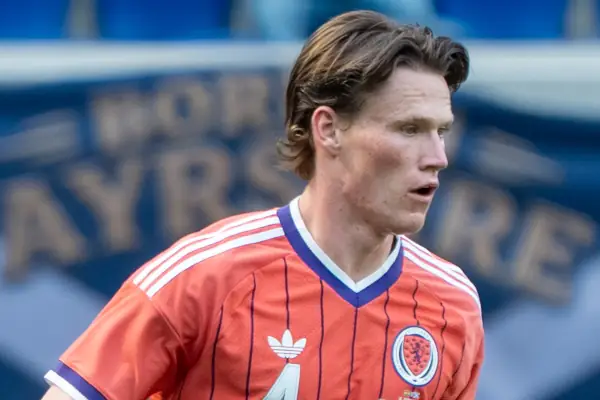
Billy Gilmour was missed
Gilmour dropping out from injury in the pre-tournament warm-up win against Curaçao seemed ominous at the time. Those concerns proved to be valid. Specifically, his ability to calmly receive & retain the ball under pressure from the defence was badly missed.
Also, if that wasn’t enough, Gilmour’s latest injury asks, is he now in the group of players who should be considered injury prone?
Was Tyler Fletcher the right choice?
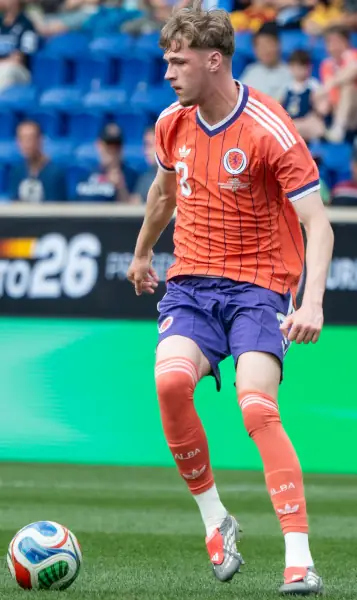
Consequently, Clarke selected Tyler Fletcher as Gilmour’s replacement in the World Cup squad. One second of play at a World Cup or continental football championship is enough to tie a player of any age for life to that nation (unless FIFA change the rules again in future).
The ideal time to have blooded Fletcher in the States, would have been late in the game if comfortably ahead of Haiti. However, so much for that fantasy against the battling, energetic Haitians, who can consider themselves unlucky not to gain a draw.
Ultimately, Clarke decided not to risk the inexperienced 19-year-old in such a high stakes game, when the Scots were defending a 1-0 lead. Nor did Fletcher get any game time against Morocco or Brazil.
Hence, Fletcher returns from the USA without the World Cup match time that would have tied such a talented prospect to playing only for Scotland. Therefore, Fletcher until further notice continues to have dual eligibility for Scotland & England.
Thus, the risk remains that Fletcher potentially could be persuaded to defect to play for the English. His brother, Jack, currently plays for England at age group level.
Should an extra midfielder have been taken?
Connor Barron and most notably, Lennon Miller missed out on a squad place. Selecting the versatile Ross McCrorie to cover RB & CB, could have freed up a place in the squad by taking 1 less specialist for each of those 2 positions.
Thus, could a Miller line-breaking pass have empowered a toothless Scots attack to score more goals?
Were the tactics right?
Adam Clery of 442, did this analysis piece on the peak period of the Steve Clarke Scotland era; namely in qualifying for Euro 2024. Furthermore, Clery made the point that realist Clarke set the team up as difficult beat, & producing few but high quality scoring opportunities. Clarkeball reached its zenith when memorably winning 2-0 against Spain at Hampden.
However, Clarke has been criticised for being overly defensive. Hence the seemingly much more positive line up he selected for the Brazil game, was broadly welcomed by fans & pundits.
Miami’s heat & humidity always seemed at least partially likely to discourage pressing Scottish football. Hence, there would be greater emphasis on trying to retain possession.
Did that heat & humidity justify the instructions to the defence to play the ultimately fatal, high risk passing football in the Brazil game? Analytical reviews such as this & this (describing Scotland’s World Cup as a disaster), clearly indicate that the team looked like they hadn’t been coached, e.g., on how to correctly invite & pass through an opposition press. Unsurprisingly given he was head coach, both point accountability at Steve Clarke (with different levels of tact). Don Hutchison after the Brazil defeat expressed his frustrations at the lack of bravery of the Scots in the tournament.
Further, previous tactics for under pressure Scots defenders of, if-in-doubt-blooter-up-the-park-to-the-CF, seem to have been a better choice for the Brazil game. Of course, everyone is clever with 20/20 hindsight.
Attacking impotence
This World Cup will not be remembered for mesmerising Scottish forwards. However, that the Scots scored only one goal, is as much down to lack of quality service as anything else.
Scotland at this World Cup lacked an effective game-breaker. Ben Gannon-Doak carried weight on his shoulders of the hopes of many, that his searing pace could provide that cutting edge.
Ultimately though, those hopes were misplaced on the 20-year-old. Gannon-Doak’s brief flashes were the exception to his limited getting involved in games. He wasn’t helped by his injury record meaning his minutes had to be managed.
Additionally, Gannon-Doak again lacked a final product when he did get involved.
Another with the highest hopes on his shoulders was Scott McTominay. He made 2 scoring attempts against Haiti, 2 against Morocco & 4 against Brazil (with 3 of those on target against Brazil).
He has a good scoring record since he was moved into primarily attacking rather than defensive duties for Scotland. Ultimately though, it didn’t work out for him & his teammates at this World Cup. 29-year-old McTominay though can be a big weapon when the new boss gets in.
As mentioned above, the Scots seemed uncoached on how to implement passing through an opposition press. Numerous teams through the ages including of much less talent than this Scotland squad, have maximised their talent by effective counter attacking.
Regrettably though, Scotland at World Cup 2026 had zero identity of being effective counter-attackers, to capitalise especially on Gannon-Doak’s explosive speed. Nor did they appear to have any particular footballing identity of any kind.
Were the results as expected?
Bookies always had Scotland likely to lose against top 6 ranked sides. In other words, Morocco & Brazil were a hellish draw for any team to face. However, the Scots were expected to win against Haiti. Thus 3 points for Scotland from 3 games ultimately was realistic.
However, given the pressure the Scots exerted in the 2nd half v Morocco, that group of players could potentially have gotten something out of that game if they had been better coached. Similarly, again if better coached, they could have been much more competitive to make Brazil work much harder to get their win.
Or is all this unfair on Clarke? Did he subject his players to drilling after drilling on the training pitch on these & other points (e.g., when & when not to press)? And the players simply hadn’t the temperament on the big stage to implement what they had been coached? Clarke, his staff & players know the truth. The Scots were certainly punished for making errors during games.
Clarke can justifiably argue the Scots should have had at least one and possibly 2 penalties v Morocco. Correspondingly though, Haiti can justifiably claim they should have had a penalty awarded against Grant Hanley.
Lewis Ferguson was the best Scots player
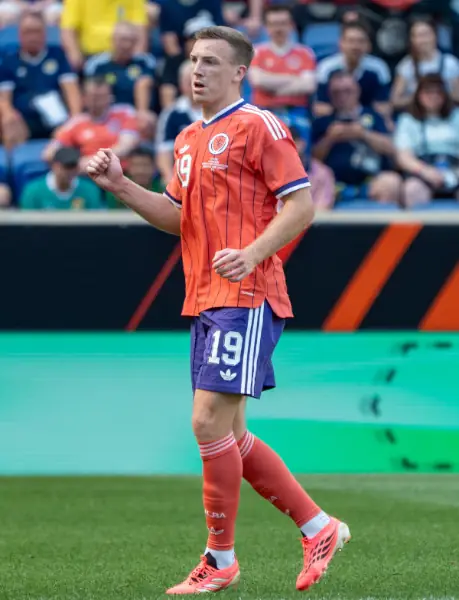
Numerous sites & metrics make it clear Ferguson was the highest performing Scot at World Cup 2026. That carries on from his form as Scotland’s best player in qualifying.
Also, Ferguson’s numbers at World Cup 2026 don’t just impress in Group C. Specifically, across the entire group phase, the FIFA website as at 28 June, reports only Jordan’s Noor Alrawabdeh covered more ground than Ferguson.
| Rank | Name | Team | Km covered |
| 1 | Noor Alrawabdeh | Jordan | 38.42 |
| 2 | Lewis Ferguson | Scotland | 36.57 |
| 3 | Scott McTominay | Scotland | 36.35 |
Ferguson similarly places well for the number of high speed runs; 451 such runs in 3 games is 21st of any player from all 48 teams.
| Rank | Name | Team | Number of high speed runs |
| 1 | Noor Alrawabdeh | Jordan | 635 |
| 7 | Scott McTominay | Scotland | 483 |
| 21 | Lewis Ferguson | Scotland | 451 |
As per our articles on the Haiti, Morocco & Brazil games, Ferguson did well for other metrics. Previously, Ferguson has been linked with big money moves to the likes of Juventus. World Cup 2026 will only enhance such transfer talk.
If Gilmour can regain fitness, he and Ferguson prospectively make a formidable & well matched CM pairing for the Scots in the Autumn internationals.
Scott McTominay also bust a gut for the Scots
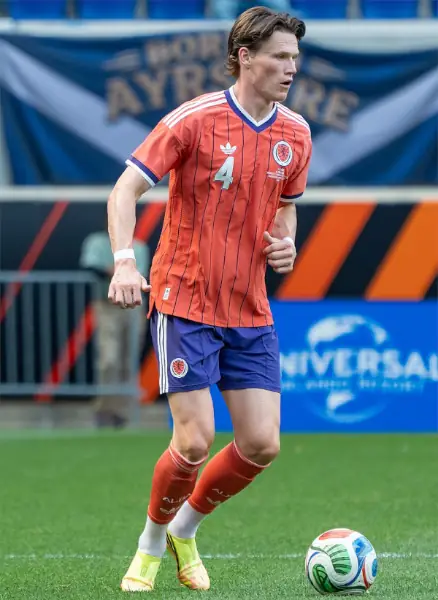
As per the tables above; notably from a Scots perspective, McTominay joined Ferguson in the top 3 players to cover the most ground of any player of any team in the group phase. McTominay covered 36.35 km, only 220 metres less than Ferguson.
In addition, McTominay also like Ferguson, placed highly in the number of high speed runs in the group phase. Specifically, McTominay made 483 high speed runs, the 7th highest of any player at the competition. Noor for his part, seemingly some kind of bionic man, ended the group stage top of both those charts.
Hence, combined with his earlier mentioned goal attempts, McTominay was clearly desperate to make an impact on this World Cup. While he didn’t get on the score sheet, it is difficult to fault him for effort.
Angus Gunn is undisputed #1
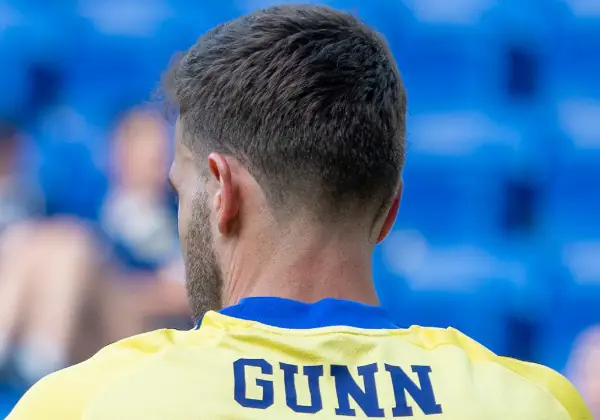
Gunn could have dealt with the cross leading to Brazil’s 2nd goal (as could Nathan Patterson), after Andy Robertson conceded possession in a bad area. Otherwise though, Gunn had a solid tournament making numerous often crucial saves. Further, Craig Gordon’s expected (but not yet confirmed) retirement, should solidify Gunn’s status as #1 in the continued absence of strong GK competition.
Aaron Hickey’s injury propensity is a big issue
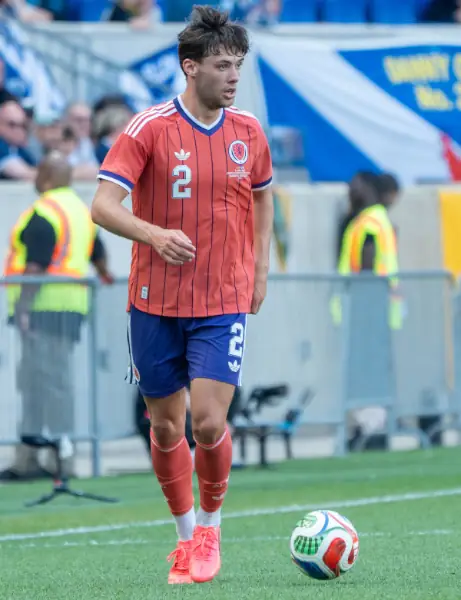
Hickey regrettably already has a dire injury record. Furthermore, his injury at this World Cup does nothing to dispel those worries. Thus, Hickey being a consistent, major contributor in future is at best questionable.
That is a big shame given that if able to consistently retain full fitness, he’d play for a club with ambitions of winning the Champions League.
Kieran Tierney is now the clear best LB option, when available
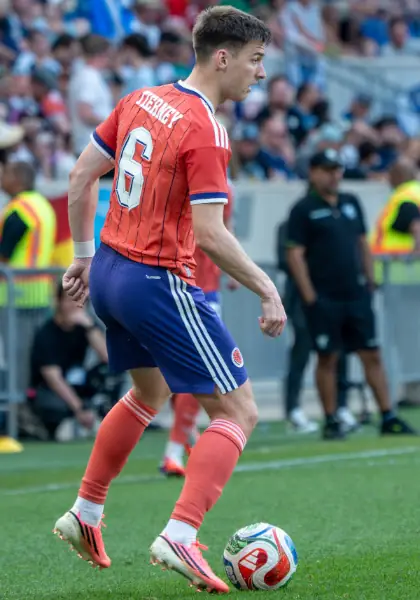
Tierney impressed after replacing Andy Robertson at half-time against Brazil. Excluding the versatile Hickey who when fit is needed at RB, Tierney now seems Scotland’s clear best LB option.
Further, now 32-year-old Robertson should be made deputy LB going forward. However, with Tierney’s injury record, Robertson won’t always be sub in future so he still has much to contribute. Unless Robertson gets a serious injury, he will still surpass Kenny Dalglish’s 102 record number of SMNT caps.
Captaincy
Further regarding Robertson; with his likely diminishing role in the team, this seems a sensible time for him to relinquish the captaincy. A new boss coming in additionally makes this the right time.

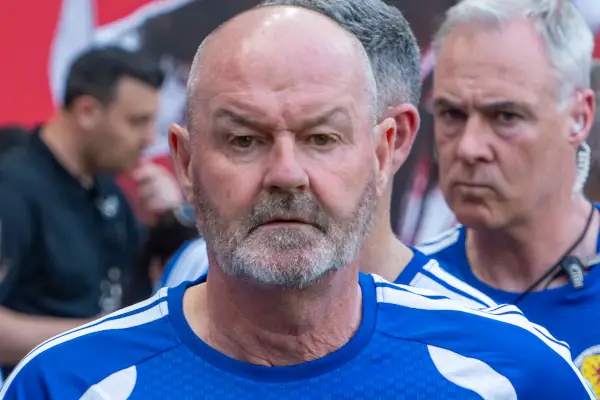
Was Steve Clarke right to resign from being Scotland boss?
Regrettably, yes. Clarke comes across as a well meaning, honest man who gave the Scotland job his best shot for 7 years. Very creditably, he got Scotland to 3 major tournament finals in 4 attempts, ending a 20 year qualifying failure streak by his predecessors. In doing so, he re-injected a level of fan enthusiasm (& thus attendances), for the SMNT that had long since evaporated. Clarke deserves enormous credit for that.
The players delivered some terrific results under his tenure, often when performances were unconvincing. However, in each of those 3 finals appearances, Scotland are remembered as going out with something of a whimper. ‘Safety first & try to nick something’ was fine when it worked. When it didn’t though, it was a magnet for criticism of turgid, unambitious football.
There’s a case for arguing Clarke should have gone after Euro 2024, not just for underwhelming performances. He did himself no favours in a post match interview when, clearly emotional, he blamed the non-awarding of a Scotland penalty on the referee being Argentinian. However, he stayed so that point is moot.
Steve Clarke loves football. There’s no evidence he loves doing press interviews. Further evidence, his walking away from the post Brazil match interview with Eilidh Barbour.
His personality is suited to many things. Dealing with the media isn’t near the top of that list.
The stakes seemed high for Clarke leading up to this World Cup. However, the SFA offer to Clarke before the World Cup of a new 4 year deal was jaw dropping.
Did that contract contain conditional clauses related to World Cup performance? If it didn’t, some real questions need asked of the SFA high-heid-yins. If there were no such conditions in the contract triggering Clarke’s exit, it is to his credit that he has stepped aside.
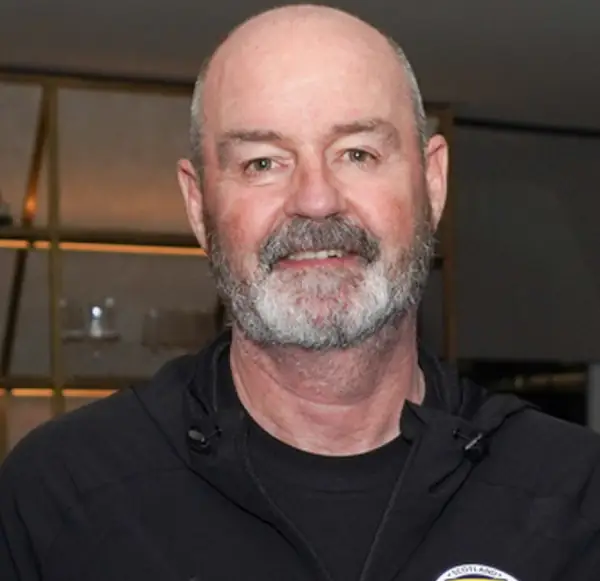
Steve Clarke, thanks for the good times, & giving it your best shot in the not so good. Furthermore, very best wishes for the future.