Sébastien Pocognoli is the new Scotland boss. Below we deep profile his background, achievements & attributes & explain why he is the most important Scotland boss in history. And we ask, is Pocognoli’s appointment a gamble or a well managed risk?
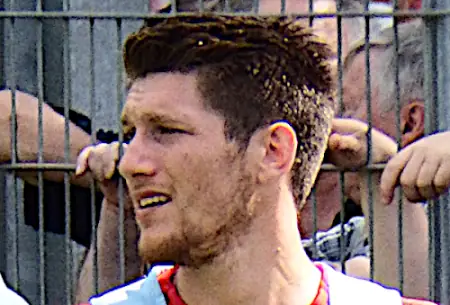
Pocognoli Background
Pocognoli was born in Seraing near Liege in the French speaking part of Eastern Belgium. His grandfather is from the town of Esanatoglia, in Italy’s Marche province, around 3 hrs drive North of Rome. ilrestodelcarlino.it reports that his grandfather, Sebastiano, had four siblings and worked as a lumberjack. However, a crisis in his profession in the 1950s meant that he emigrated to Belgium to work as a miner. He was in his early 20s at the time. Sebastiano married a Belgian lady and their son Sergio is Sébastien’s father. Both maintained ties with Esanatoglia with Sébastien right through to his teens spending every summer there with his family.
The Monaco website described Pocognoli at one point when growing up as harbouring ambitions of becoming an archaeologist:
“I’ve always been interested in travel, culture, and adventure. Humanity inspires me. That’s what I love about my job: mixing cultures, learning from others. I’m all for sharing and communion between cultures… and it’s in this milieu that I feel good. We enrich ourselves through contact with others; prejudices scare me because they are dangerous.”
Pocognoli playing career
Racing Genk
As a schoolboy he was with Standard Liege before aged 15, transferring to Racing Genk. At Genk he played LW before converting to LB. He & other youngsters of that time moved to Genk since they felt Standard Liege didn’t give youth a chance in the first team (Pocognoli in contrast was 16 when he made his Genk first team debut). Thoughtful & intelligent, he also subsequently stated that Genk made it easier to combine football with his studies. In that same March 2006 interview when 18 years old, he was compared with David Beckham. He made this enlightening reply supplementing his studious outlook, revealing something of his personality & attitude:
“Beckham is an example for any winger. But I don’t think he’s a top footballer. I don’t like his life off the field. Give me Zidane anyway. A top footballer. And he lives a quiet and withdrawn life. Never gets into all those magazines.“
Fair enough. And in the last sentence of that interview he also commented:
“I’m very ambitious.”
AZ Alkmaar
After impressing at Genk, in 2007 & shortly before his 20th birthday, he transferred to AZ for €2.75 million. In his 2nd season with the Alkmaar outfit, he picked up a Dutch league title winner’s medal. That 2008/09 AZ league title is all the more impressive given this point; it is one of only 3 occasions since 1964 when the Dutch title hasn’t been won by the Ajax / Feyenoord / PSV triopoly. AZ were managed by Louis van Gaal who at the end of the season, left to take the FC Bayern job.
Pocognoli later stated of his ex-boss as AZ:
“The most complete manager I worked with was certainly Louis van Gaal. He always wanted to win and pushed you to the limit. But no matter how tough he was on his players, he also protected them. Despite his stern demeanour, he was actually very humane in his interactions.”
A separate report stated that Pocognoli remarked:
“When Louis Van Gaal left Alkmaar, I became an average player, so I realised that a manager could make a player over-perform.”
21 year old Poco, as he is known, was reported receiving transfer interest from Barcelona. However, he signed a new contract with AZ instead.
The season after he became a squad player through a combination of injury and new boss, Ronald Koeman, favouring others. However, Koeman was shown the door in December, replaced by ex-Rangers boss, Dick Advocaat. Pocognoli though left in that January 2010 transfer window.
Later playing club career
He then returned to Standard Liege. Liege won the Belgian Cup in 2011. Pocognoli though missed the final due to injury.
He then subsequently transferred in January 2013 to Hannover in the Bundesliga top flight, spending 18 months there.
Next he transferred to West Bromwich Albion in the EPL in the summer of 2014 (signed by Alan Irvine 6 months after Steve Clarke had moved on from being boss there). Darren Fletcher was a teammate. Pocognoli then played a season for Tony Bloom owned Brighton in England’s 2nd tier winning 2015 auto-promotion to the EPL.
Pocognoli then joined for a 3rd spell at Standard Liege. There he won the Belgian Cup in 2018, this time playing in the final as a late sub in stoppage time of extra-time.
He ended his playing days with 2 seasons at Brussels based Union Saint-Gilloise (USG) in Belgium’s 2nd tier. In the 2nd of those seasons, they romped away to win promotion & the title by 18 points. That 2021 promotion earned USG a first Belgian top flight appearance since 1972. Pocognoli was a squad player at USG, playing only 7 league games across those 2 seasons. After a brief late season comeback after a year out injured due to a serious knee injury, he retired from playing in 2021.
Belgium international
Transfermarkt list Pocognoli as having collected 66 age group caps for Belgium. For the U21s he played in the Euro 2007 finals, reaching the semis where they lost 2-0 to Serbia. That qualified Belgium for the Beijing 2008 Olympics. Belgium again reached the semis, this time losing 4-1 to Nigeria.
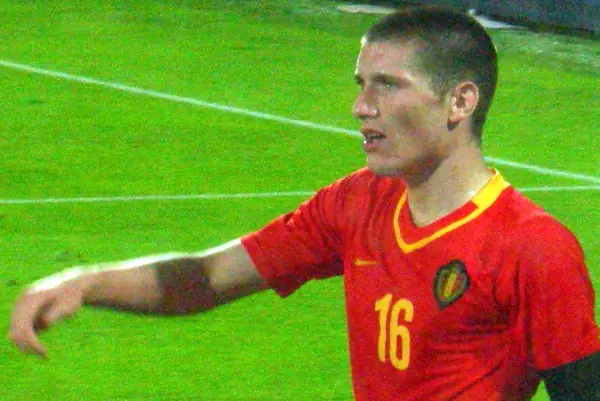
He collected 13 full caps for Belgium spread over 6 years & without cementing a place in the team. He did though sub on in September 2013, in the 78th minute of the 2-0 win v Scotland at Hampden Park. Steven Defour & Kevin Mirallas scored. Pocognoli didn’t make the Belgium 2014 World Cup squad, despite having been in the squad for all the qualifiers.
Pocognoli coaching record
USG U21s
2 days after retiring as a player, USG announced Pocognoli as the new coach of their U21s. He was 34 years old. Tony Bloom had become the major investor at USG in 2018. Developing the youth setup there was one of the club’s major priorities, given that their youth setup at the time was well behind the level of their major rivals. Pocognoli said at the time:
“I feel a lot of pride but above all a great responsibility. We have young players who have enormous talent at the Union and in Brussels. My role will be to put them in condition and prepare them as best as possible so that they can have a chance to show themselves in the first team.”
They finished 4th of 14 in the 2nd tier of that age group competition that 2021/22 season. That was an important achievement ahead of the planned 2022 restructure of Belgian football. Specifically, that restructure was to integrate the top 5 reserve teams from that division into the lower divisions of non-age restricted football. Thus, Pocognoli achieved what he had been tasked with fulfilling that season.
Genk U18s
He then that summer of 2022, left USG. Specifically he was poached to return to Genk. Initially it may seem odd for an ambitious man, moving from coaching U21s to U18s. There were though reasons. Specifically, the Genk youth setup was very well developed. Of particular interest to Pocognoli was that in the season ahead, he wanted the club international experience of managing Genk U18s in UEFA Youth League.
Jean-François de Sart coached Pocognoli when Pocognoli was with the Belgian U21s, and also worked well with him when de Sart was sporting director of Standard. de Sart later stated of Pocognoli:
“He made some very good choices when it came to career development, he is reaping the rewards today. Rather than starting directly as head coach – which many do and which in my opinion is a mistake –, you have to go through young people, it’s the best possible school to learn the profession. Poco was also successful in completely different contexts: if at the Genk youth school everything was already perfectly organised when he arrived, he had previously known the Union, where there was practically no structure of existing youth.”
In that UEFA Youth League, Genk eliminated Slavia Prague (5-4 on aggregate) & then Coleraine (10-1 on aggregate), both over 2 legs. They then eliminated Juventus 4-3 at home in a one-game knockout contest. Next though, they lost 4-1 at Atlético Madrid in a last 16, one-game eliminator.
Domestically, they started with poor form; only 2 wins & a draw in their first 8 games. Then though they hit their stride. 10 wins & 2 draws from the last 14 league games, earned a play off place. Their good form continued in the playoffs, winning 4 & drawing 1 of six games. He left after one season to take up his next appointment.
Belgium u18s
In his time coaching Belgium U18s, they only played 6 games (W2,D2,L2). He was then approached by an ex-club offering him his first job coaching a senior first team.
Pocognoli at USG
The USG Pocognoli joined
With the Tony Bloom Jamestown Analytics revolution bearing fruit at USG, as mentioned above USG were promoted to the Belgian top tier in 2021. On return to the top tier, they were quickly a force to be reckoned with, finishing 3rd twice & 2nd once in the first 3 seasons since promotion. They also won the Belgian Cup at the end of the 3rd of those 3 seasons in 2024. It was thus a considerable vote of confidence when they offered Pocognoli the job that summer of 2024 to manage their first team, with the goal of winning what Opta typically rank as the 6th or 7th strongest division in world football. As a benchmark, Opta usually rank the Scots top flight at around the 40th strongest division in world football.
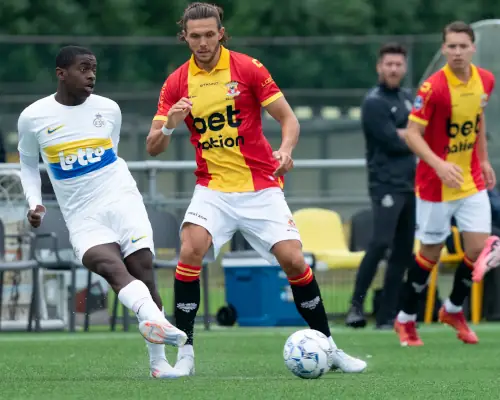
Naïm Aarab, was Pocognoli’s assistant who coached the Union U21s. He commented of Pocognoli:
“From the first training session I saw him coach, I knew he was a guy who knew how to manage a group, communicate, transmit something to the players. We felt that he had this gift, this talent, and that he himself had been attentive to certain details when he was a player.”
An underwhelming start
Pocognoli started the season by defeating Club Brugge in Brugge to win the Belgian Supercup (a 1 game competition in which Belgian league & cup winners play each other, similar to the Community Shield in England).
Similar to his time coaching at Genk, Pocognoli’s outfit had a slow start to their league campaign. In the first 13 league games, they had 3 wins, 7 draws & 3 defeats to show for their labours. To remedy this, Pocognoli looked at the data. At this point the metrics stated:
- 23.5 xG created — 3rd-best in the league
- 15.4 xG conceded — 2nd-best defence
- +0.58 xG difference per match — 3rd-best in the league
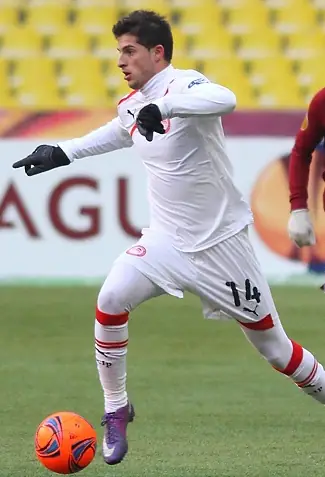
They were falling short in goalscoring, with only 13 goals from those 13 league games. Pocognoli addressed the situation by hiring an experienced ex-forward to give specialised coaching to his forwards. The man he hired to perform alchemy was 60 cap ex-Belgium internationalist, Kevin Mirallas.
Winning the league
USG started gaining momentum with a 6 game run of 3 wins & 3 draws. Then they went into overdrive, winning 9 games out of 10. They ended the 30 game Belgian regular season in 3rd, qualifying for the 6 team end of season mini-league play offs that decide the Belgian league title. In the 17 games at that point in which Mirallas was on the coaching staff, they scored 27 goals, averaging 1.59 per game (up from 1.00 per game pre Mirallas).
It was in that play-off series where his team really did the business; played 10, won 9, drew 1, lost zero. At the end of the campaign they had scored 71 goals, 2nd highest in the Belgian league that season. This was the first time USG were Belgian champs since 90 years previous in 1935. Unsurprisingly Pocognoli won the Coach of the Season award in Belgium. He was 37 years old at the time. Mirallas’ contribution is a reminder, though, that there’s more to a coaching team than just the head coach.
They team he put on to the pitch played an aggressive style of football, emphasising, grit, determination & intensity, & with an attacking 3-4-1-2 formation. He was reported commenting:
“The game that I like is a dominant game with and without the ball, with high pressing, counter-pressing, but also with control in possession,”
USG in Europe that season
Their underwhelming early season form was also reflected in UEFA competition. They were eliminated in August of that season in the Champions League 3rd qualifying round by Slavia Prague. Dropping down into the Europa League, they achieved only a home draw with Bodø/Glimt sandwiching one goal away defeats to Fenerbahçe & Midtjylland.
As with the league, though, form picked up from early November when Mirallas arrived. They drew at home with Roma before 3 straight one goal wins, against FC Twente (a) & at home to both Nice & Braga. Their last game in that group was a 2-1 defeat to Rangers at Ibrox. Credit Mirallas again. In the 4 games before he joined, they had only 2 points with only 3 goals scored. In the 4 group stage games after Mirallas joined, they scored 6 goals, winning 3 games out of 4.
USG finished 21st in the group phase to advance unseeded to the knockouts. USG were then eliminated at the next stage by Ajax over 2 legs, 3-2 on aggregate.
Early 2025-26 at USG
Pocognoli’s team carried over their excellent late season domestic form into 2025/26. They hit top spot after 3 games and remained there until he left on 9 October. Of the 10 league games he coached USG that season, they won 7, drew 2 & lost only 1.
They played 2 Champions League games before he left. They won 3-1 at PSV & lost 4-0 at home to Newcastle United.
He left USG having managed their first team in 69 competitive games.
AS Monaco
Background
Adi Hütter preceded Pocognoli as Monaco boss. After 4 wins & 1 defeat in the opening 5 league games, Monaco were top of the league. In the next 2 games though they lost at Lorient & drew to Nice at home, meaning they had dropped to 5th in the table. In the Champions League they had lost 4-1 at Club Brugge & drew 2-2 at home versus Manchester City. That was insufficient for the Rybolovlev family who own the club. Hütter was thus relieved of his duties as Monaco Head Coach on October 9th.
Pocognoli thus became the 19th Monaco Head Coach appointee in 20 years (or 18th if excluding one caretaker boss). Pocognoli joined on 11 October 2025 on a 2 season deal. Mirallas joined him on the Monaco coaching staff.
Ligue 1 campaign
Pocognoli seemed to not suffer on this occasion a slow start. He won 2 & drew one of his first 3 league games. However, a bad run followed of 7 defeats in 8 league games, punctuated only by a 1-0 home win over PSG. As reported by L’Equipe, after consecutive 4-1 defeats in November to Lens (h) & Rennes (a), he took surgery to the team. Players were struggling to implement the back 3 system he sought to impose after his arrival the month before. Hence, he switched to a back 4 setup that his players were familiar with from his predecessor. He also restored Folarin Balogun as the central striker & benefited from players returning from injury.
That seemed to turn the league campaign around with 8 wins & 2 draws from 10 games. However, their league season ended poorly. They were 5th with 6 games remaining. 5 points though from those last six games meant they dropped from a 5th place Europa League finish down to 7th, qualifying instead for the UEFA Conference League. Poor results were attributed to injuries, poor game management & defensive collapse. They led 2-0 at Toulouse with 61 mins played, before drawing 2-2. The last game of the season was worse. They lost 5-4 at Strasbourg after being 4-1 up after 58 mins. After that last league game, he stated:
“My role is to analyse what didn’t work, and naturally, there’s a need for self-reflection. I do my own every day, and the most important thing now is to look concretely at what worked and what didn’t this year. When I arrived, I tried to bring back an identity, group cohesion, core principles, and a code of conduct that I’ve never changed. So it’s crucial to retain the positives and keep them as a foundation for next year. Everyone, at every level, needs to engage in self-criticism, try to learn, and evolve for next year.“
Champions League
In the Champions League group phase they played 6 games under his command. They won 2 and in the 3 draws they chalked up 0-0 home results against Tottenham Hotspur & Juventus. However, they lost 6-1 at Real Madrid who exhibited the importance of ruthlessness in front of goal. Read what you wish into that despite the scoreline, Monaco mustered 20 attempts on the Real goal.
In the knockout phase, Monaco were drawn to play PSG. In a pulsating, dramatic 2 leg contest, Pocognoli’s side were 2-0 up at home before PSG pulled it back to 2-2. Achraf Hakimi scored the PSG equaliser. Then, Monaco’s Aleksandr Golovin was red-carded 2 mins into the 2nd half for a studs-up challenge onto a PSG shin. PSG capitalised on the extra man advantage to win the leg 3-2.
However, Monaco had PSG rocking in the 2nd leg, deservedly leading 1-0 at HT & playing good football. In the 57th minute though, they suffered another red card, this time to Mamadou Coulibaly who picked up a 2nd yellow. PSG scored within a minute to restore their one goal aggregate advantage. Then, Khvicha Kvaratskhelia scored to seemingly put PSG on easy street, 5-3 on aggregate and with an extra player. Not so, with Pocognoli’s 10 man team commendably putting up a fight til the end.
Monaco’s Jordan Teze scored in the 90th minute to pull the deficit back to a goal down (5-4 PSG). 4 mins into stoppage time, Monaco swung a free kick into the PSG box. Wout Faes had a free header from 10 yards with just the GK to beat. However, he failed to connect his head with the ball that instead glanced off his shoulder. The ball harmlessly flew past the post. The usually stoic Pocognoli’s reaction of emotional disbelief is worth a watch in this video.
Available again
At the end of the season on 1st of June, Pocognoli suffered the same fate from the Rybolovlev family as had Hütter before him. Pocognoli’s record at Monaco was 16 wins, 9 draws, and 13 losses. Those 38 games added to the 69 at USG means he has managed senior team in 107 competitive first team games to date.
Pocognoli was thus available when Steve Clarke resigned as Scotland boss after elimination from the 2026 World Cup.
Pocognoli attributes as a coach
What he puts onto the pitch
The Monaco website introducing him there stated:
Tactically, the Belgian coach advocates a modern and bold style of football. Adhering to a 3-4-1-2 system, he doesn’t hesitate to adapt his game plan to suit his players. His style of football is demanding, based on grit, positive aggression, and forward play. But beyond the system, Sébastien Pocognoli places the emphasis above all on the human element. “For me, players are artists. And for an artist to put on a good show, they must be comfortable mentally and physically,”
Shades of Jens Berthel Askou in the last 7 words?
Other reports state that at Monaco, he operated either a 3-4-3 or a 4-2-3-1, and being unafraid to vary the team formation depending on the opposition.
Personality
Further comment from de Sart:
“I love his attitude on a bench, because he is focused, lives his match without making a cinema like many coaches do, with attitudes without content. He’s not a showman.”
USG GK Anthony Moris remarked that for all Pocognoli’s charisma with his players, he is discreet & modest when talking with the media:
“It’s a media facade, He is someone who protects himself a lot, who hates being praised and is very suspicious of it. He knows that praise can make you forget the main elements of work and questioning. But I can tell you that from the inside, he is a very human person with whom we can have very easy contact. It requires a lot of communication from all of its players, from the most experienced to the youngest.”
“Last year, with the Union, we had a complicated start to the season in terms of results. The coach remained very calm. In his match debriefings and during video analyses, he showed us that we were on the right track in what he wanted to implement. He managed to get into our heads, he prepared us perfectly mentally to get the title. He’s not someone who falls into emotion. He is very rational in his analyses.”
Subsequent to that interview when aged 18, has since been reported as stating that his favourite players are Carles Puyol as a 100% team player, & Ronaldinho as an artist.
What does all this mean can be expected from Pocognoli as Scotland boss?
- He has bags of experience of developing youngsters
- He prefers the quiet off field approach of Zinedine Zidane to attention seekers such as David Beckham. Oli McBurnie, if you are serious about gregaining a squad place, think twice before you broadcast details of conversations you have with the coaching team
- In contrast to the safety first approach of Steve Clarke, it seems Scotland fans are in for something more like Jürgen Klopp style, heavy metal football. That will suit players like Scott McTominay & Lewis Ferguson, who were both in the top 3 metrics for running across the entire World Cup group stage. Will, though, the injury prone players be able to cope with such intensity? And which players un-renowned for intensity in their play will miss out?
- Pocognoli shares the philosophy of the likes of Jens Berthel Askou of ensuring players are not just in good physical condition, but also comfortable mentally
- While Pocognoli’s de facto preferred formation is reported as 3-4-1-2, he doesn’t dogmatically stick to that and pragmatically changes things if he feels appropriate, based on his players & the opponent
- He has a high emotional quotient, is rational, detailed & uses data to at least some degree
- His media conferences are unlikely to be a barrel of laughs (not as if that matters)
Is Pocognoli’s appointment a gamble or a well managed risk?
Obviously it remains to be seen what he delivers. At this stage though, it seems the SFA have done well in appointing what appears a very credible appointment from within the available budget.
Some have reported that Pocognoli’s appointment is a gamble. However, that is incorrect phrasing, given that gambling is purely dependent on random chance. It is more correct to state that every job appointment carries an element of risk. Risk can be mitigated by reducing either or both of the multiplying factors that contribute to risk; probability & impact.
The SFA appear to have been methodical & used data driven decision making, endeavouring to mitigate likelihood of an unsuccessful hire. Further, Pocognoli’s contract structure likely includes performance related bonuses rather than exclusively guaranteed payments. Hence that contract reduces risk impact in case the hire goes badly. While there’s no guarantee Pocognoli will be a successful hire, the SFA seem to have at least done a decent job in how they carried out the recruitment.
Some have drawn attention to that Pocognoli has only 2 seasons of experience managing senior first team football. While that is true, that ignores other experience he has gained in his career, contributing to the wisdom & attributes that he offers. He is also obviously highly regarded by others who have met & worked with him. He has won the league title in one of the Opta ranked top 10 divisions on earth, has managed in one of the ‘big 5’ divisions, and has experience managing in UEFA competitions such as the Champions League. How many available Scottish managers can claim any of those 3 accolades? And he brings with him an assistant with whom he has demonstrated that they each offer complimentary skills for successful outcomes.
Why is Pocognoli the most important Scotland boss in history?
Player recruitment
One of the most important aspects of Pocognoli’s appointment is that it makes a statement with this & likely for future appointments. Namely that the SFA mean business in terms of empowering a successful national football team. This is crucial for the Scotland Men’s National Team brand. There are talents coming through with multi-eligibility who are currently considered elite-level prospects. Of course with drop off rates, not all these players will make it to elite level. There are though currently hopes that these boys & many others will make the grade. To name a dozen of those:
| Player | Club | Eligibility |
| Dan Armer | Manchester United | Scotland / England |
| Caelan-Kole Cadamarteri | Manchester City | Scotland / England / Jamaica |
| Tyler Fletcher | Manchester United | Scotland / England |
| Kyle Glasgow | Rangers | Scotland / Portugal |
| Harry Gray | Sheffield Wednesday on loan from Leeds United | Scotland / England |
| Dara Jikiemi | Liverpool | Scotland / Nigeria |
| Kier McMeekin | Manchester City | Scotland / England / Northern Ireland |
| Jack McGrath | Aston Villa | Scotland / England |
| James Overy | Manchester United | Scotland / Australia |
| Zion Pullan | Celtic | Scotland / Nigeria / Spain |
| Lorenzo Sassetti | Dundee United | Scotland / Italy |
| Cameron Williams | Liverpool | Scotland / England |
Scotland needs players such as these to follow other top class players through the decades, who committed to Scotland despite having the realistic prospects of playing for supposedly ‘bigger’ nations; e.g., Bob Wilson, David Harvey, Bruce Rioch, Don Hutchison, Kieran Tierney, Scott McTominay.
Why is recruitment important in international football?
Anyone claiming that recruitment has no place in international football is kidding themselves. The more of these players that commit to Scotland, the more likely Scotland can produce a squad that can not just break the barrier and get out of the group at a major finals. Specifically, such a squad can be genuinely competitive going deep into the finals of a tournament.
Downstream from that, success breeds success; more multi-eligibility players committing to Scotland, more fans through the Hampden turnstiles for more cash for player development, & more on-field success. And so that constructive cycle continues.
Benefits don’t just extend to football.
Sporting success creates a psychological “feel-good factor” boosting population happiness and self-esteem. Effects spill over into perceived personal competency & even workplace productivity. Team success fosters civic engagement & national identity, acting as a unifying force bridging social divides. Researchers view these intangible benefits, such as community morale and shared experiences, as public goods that significantly improve overall residential quality of life. And of course there are documented population spikes related to successful sporting competition.
Success has economic benefits; higher ticket sales, merchandise revenue, and sponsorship deals, with also immediate hospitality & retail spikes from fans watching games & attending celebrations. And if the supreme PR ambassadors called the Tartan Army get more media exposure, more tourists visit Scotland. This all drives job creation.
Euro 2028
Euro 2028 looming compounds that previous point. For Euro 2028, Scotland have host nation benefits; namely a favoured qualification path, & home advantage in the finals. Assuming a pandemic type calamity doesn’t befall society, Euro 2028 is an opportunity like no other for Scotland.
Given the prospectively elite, multi-eligibility talent currently out there & the Euro 2028 host nation benefits favouring Scotland, Sébastien Pocognoli is thus the most important Scotland boss appointee in history.
What next from Pocognoli?
Kevin Mirallas is likely to be appointed Pocognoli’s assistant boss. That though is TBC.
Separate to Pocognoli’s team, Graeme Murty prior to the SFA’s Pocognoli announcement, was reported by Livescore as being lined up for the U21s job, recently vacated by Scott Gemmill. That appointment is also TBC. There seems no mention of anyone in particular so far as likely to take the U17s job recently vacated by Brian McLaughlin. The question remains whether Stevie Naismith retains any involvement in the new Scotland setup.
We await not just Pocognoli’s first Scotland squad, but also to see who he appoints from the list of possible captains. Does he keep Andy Robertson for continuity? Or will he decide changing captain can uplift performances of the team? Steve Clarkesque, Pocognoli has spoken of maintaining squad harmony. Also, Pocognoli’s comments valuing a Champions League winner in the squad, suggest initially at least that Robertson will keep the armband.
It is to his advantage that the forthcoming Nations League break will encompass 4 games. Hence unusually in Europe in a mid-season international break, national team managers will have 3 weeks with which to educate, coach & drill ideas into players.
fitba.scot wishes every success to Sébastien Pocognoli, Kevin Mirallas & everyone involved with Scotland national football teams.